When Should You Sell Your Gold and Silver?
When the founders of Harvard Gold Group were children, their older sister once grabbed their dad’s rare half-dollar coin to pay for a school lunch that cost just twenty-five cents. To her, it was just fifty cents. To the lunch attendant, it was something very different.
The coin was pulled aside. A phone call was made home.
That half-dollar wasn’t just money — it was real money.
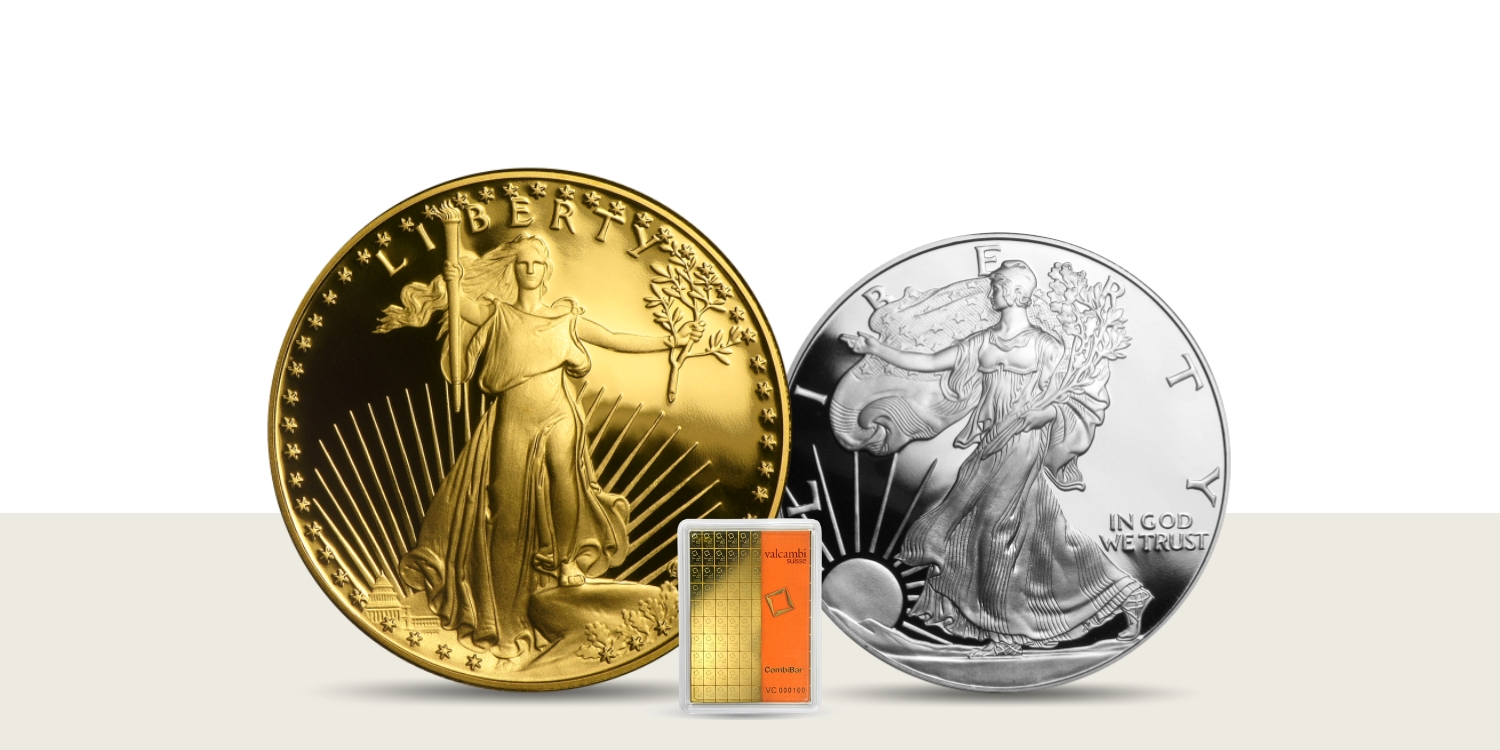
Back in the 1980s, a quarter could still buy something meaningful. If that quarter had been minted before 1965, it contained 90% silver. Today, the melt value of a pre-1965 silver quarter is around $14–$15 depending on the silver price.
That childhood story is more than a memory. It is a powerful reminder of the difference between face value and intrinsic value — and why understanding that difference matters now more than ever.
Which leads to the real question:
When should you actually sell your gold and silver?
A Hotel Floor Made of Gold — and the Bigger Question
In Macau, a luxury hotel that opened in 2006 famously embedded 1-kilogram gold bars beneath glass panels in its lobby floor, creating a literal golden walkway.
Recently, the hotel’s parent company removed and sold 79 kilograms of gold, reportedly generating approximately $12.8 million. Management described the move as a way to “strengthen financial flexibility” and prepare for future investment opportunities.
But here’s the deeper issue:
If gold is financial insurance… why sell the insurance for paper currency?
The sale wasn’t framed as an emergency debt payment. It wasn’t tied to a clearly defined capital project. It was positioned as optional liquidity — converting hard assets into cash for flexibility.
That raises a broader monetary question.
When companies, institutions, or individuals sell gold, what exactly are they trading it for?
In most cases: fiat currency.
Is Gold Rising — or Is Currency Falling?
We often hear that “gold is going up.”
But another way to view it is this:
Currencies are losing purchasing power relative to gold.
Whether it’s the U.S. dollar, the Hong Kong dollar, the euro, or the yuan — modern fiat currencies are inflationary by design. Governments expand money supply to manage debt, stimulate growth, and stabilize markets. The result is long-term currency debasement.
The Federal Reserve openly targets 2% annual inflation. That means a planned decline in purchasing power every single year. Over five years, that compounds into a significant erosion of savings held in cash.
Gold doesn’t rise randomly. It reflects confidence — or lack thereof — in currency stability.
And central banks understand this clearly.
Global central bank gold purchases have surged in recent years, with record physical demand driven largely by Asia — including China, Japan, and India. Nations are quietly diversifying reserves away from exclusive dependence on the U.S. dollar system.
That is not coincidence.
That is strategy.
The Debt Problem No One Can Ignore
Western economies are carrying near-record debt-to-GDP ratios. U.S. Treasury debt continues climbing, and major financial institutions have begun openly discussing the long-term sustainability of sovereign debt levels.
Some analysts have even projected the possibility of $6,000 gold in the coming years, not because gold is “speculative,” but because debt burdens make inflation a politically easier solution than austerity.
Governments historically choose currency expansion over default.
Gold cannot be printed.
That scarcity is precisely why central banks accumulate it — and why long-term investors hold it.
So When Does It Actually Make Sense to Sell?
At Harvard Gold Group, we believe gold and silver are tools for preserving purchasing power. But that does not mean you should never sell.
The key is intentionality.
Selling precious metals makes sense when you are converting stored value into something tangible, productive, or necessary.
Examples include:
- Paying down high-interest debt
- Funding essential home improvements
- Purchasing real assets
- Rebalancing a portfolio strategically
- Covering an unavoidable major expense
- Converting gains into a meaningful life experience
In these cases, you are transforming one form of real value into another.
What does not make sense is selling simply because prices have risen — and then sitting in depreciating cash with no plan.
If you sell metals and immediately deploy the capital into something purposeful, you preserve value.
If you sell and hold cash for two years while inflation erodes it, you may lose purchasing power — even if you “sold high.”
Gold and silver are not trading chips. They are monetary anchors.
Bull Markets, Corrections, and Perspective
Precious metals are not immune to volatility. Corrections happen — even in strong bull markets.
Silver, in particular, is known for sharp moves both upward and downward. It recently surged above $80 per ounce after previously pulling back from a spike near $120. Analysts continue to debate whether $100 silver is within reach in the coming cycle.
Volatility alone is not a reason to sell.
It is a reason to evaluate your broader financial strategy.
Silver, the Super Bowl Trophy, and Real Value
Consider the Lombardi Trophy awarded each year to the Super Bowl champion. Produced by Tiffany & Co., it is made of sterling silver — 92.5% pure silver — weighing roughly 7 pounds (over 3,000 grams).
At elevated silver prices, the melt value of that trophy can swing dramatically from one year to the next — sometimes doubling or tripling depending on market conditions.
The trophy’s design doesn’t change.
The metal content doesn’t change.
Only the currency measurement changes.
That is the lesson.
Gold and silver don’t become more valuable overnight. The measuring stick — fiat currency — changes.
Sell With Strategy, Not Emotion
At Harvard Gold Group, our core message is simple:
Sell with intention.
Sell when converting metal into something real.
Do not sell simply to trade enduring money for depreciating currency.
Precious metals are long-term monetary assets. They serve as protection against currency erosion, debt expansion, and systemic risk.
In a world of persistent inflation targets and expanding sovereign debt, gold and silver are not relics of the past.
They are financial discipline in physical form.
And knowing when to sell begins with understanding why you bought them in the first place.
Story by: Harvard Gold Group