
4 Unmistakable Signs Before Every Market Crash
Where Are We Now + What Is The Best Protection?
In this report, we’ll outline the four recurring patterns that consistently appear before a crash and show how gold offers a proven safeguard for protecting wealth, especially during times of crisis. A proper hedge isn’t just a strategy— it’s the cure for fear.
- Overconfidence & Speculation – when optimism blinds investors to reality.
- Regulatory Failures – when oversight lags behind innovation— or when whiplash, on-again-off-again regulation creates cracks in the system.
- Poorly Understood Innovation / Misunderstood Investments – when new products are widely used but poorly understood.
- Explosive Debt Growth – When leverage builds, it becomes the silent trigger that can turn even minor tremors into financial earthquakes— unleashing tidal waves of collapse across global markets.
By recognizing these patterns, investors can better prepare for the storm— and position themselves to preserve wealth rather than lose it when the next downturn strikes.
Market Crashes Rarely Happen Overnight
Market crashes are usually the result of mounting pressures— economic, financial, and psychological— that build for months or even years before finally tipping into collapse. The question isn’t simply “what pops a bubble,” but rather: what transforms a normal downturn into a generational financial crisis?
Take 2008, for example. Risky mortgage-backed securities fueled one of the largest housing bubbles in history. As lenders like Lehman Brothers toppled and regular home buyers’ delinquency rates surged, the system cracked. Housing values plunged by 30–40% in some regions, many retirement accounts 401(k)s looked like 201(k)s, losing value almost overnight, and unemployment soared. After the 2008–2009 Great Recession, the census.gov reported that the average U.S. household incomes and wages were effectively pushed back more than a decade. This was absolutely a generational setback.
History shows this pattern is not new. During the Great Depression, urban centers were devastated, with one in four Americans unemployed and homelessness spreading rapidly. These crises underline a critical truth: downturns are inevitable, but full-scale crashes do not emerge out of thin air. They are always preceded by warning signs.
The fear of waking up to see your investment values crashing or your savings suddenly at risk is real— but it’s also avoidable. The key is recognizing the signals before they reach a breaking point and putting a hedge— your financial “insurance”— in place before the house is on fire.
The First Market Crash: Tulip Mania
To understand the recurring patterns behind market crashes, it helps to step back to the earliest documented example— long before computers, Wall Street, or even the industrial age. The year was 1634, and the setting was the Netherlands. Though still a young nation, recently independent from Spain, the Dutch had already launched the East India Trading Company, created the world’s first stock exchange, and were dominating global trade much like the United States did in the decades following World War II. This period became known as the Dutch Golden Age, an era of tremendous wealth and cultural achievement.
But with new wealth came new risks. It wasn’t long before the Dutch experienced the first recorded financial crash— one that revealed the earliest form of a pattern we still see today:
SPECULATION FUELED BY OVERCONFIDENCE
At the center of this mania was something deceptively simple: the tulip flower. Rare, exotic, and visually striking, tulips became a status symbol among the wealthy. Prices soared as elites flaunted them. Historian, Edward Chancellor noted that at one point, a single pound of tulips sold for the equivalent of a month’s wages— about $3,300-$4,000 in today’s dollars. Expensive, but still within reason for those who wanted to show off.
Then things escalated. As demand grew, merchants and traders piled in— not just to own tulips, but to flip them for profit bringing about speculation. To fuel the frenzy, the Dutch introduced a new financial invention that still exists today: futures contracts. This is where leverage entered the game. Instead of paying full price for tulips, buyers could put down a small deposit and secure the right to purchase them the following season.

That’s when things really got wild. Imagine putting just $3,300 down on a contract, and by the time the tulips bloomed, the market price had exploded to $30,000. Suddenly, the paper contract itself was more valuable than the flowers. People weren’t trading tulips anymore— they were trading paper promises, flipping them for quick profits. Betting that someone else would pay more tomorrow. Tulip futures skyrocketed. At the peak, certain bulbs were worth the equivalent of five years of an average salary— the kind of money most people would spend on a house, not on flowers.
Investors convinced themselves that tulips would never lose value. Even if prices dipped, they reasoned, rare bulbs could simply be replanted for the next boom. This was the classic stage of irrational exuberance— when optimism blinds markets to any kind of reality.
But bubbles always burst. When buyers finally lost interest, tulip prices collapsed almost overnight. The fallout didn’t just destroy tulip values; it rippled through the futures market, banks, and even the farmland tied to tulip cultivation. Entire fortunes vanished. And yet, before the crash, nearly everyone believed tulips were “different” because they were special.
Panic of 1907 Contrasted by 1929
REGULATORY FAILURE
To get a clear view of the second pattern, Regulatory Failure— when those in charge either wait too long to act or intervene too late and too aggressively. History offers two powerful warnings just decades apart. In the Panic of 1907, President Teddy Roosevelt cracked down on powerful investment trusts that had grown unchecked. His reforms were well-intentioned, but the sudden pressure hit the system at its weakest point and helped trigger a sharp downturn. By contrast, in 1929, regulators did almost nothing as the market spiraled out of control. In one case, they acted too late. In the other, they barely acted at all.
The backdrop was the Roaring ’20s— a decade of unprecedented wealth, cultural excess, and optimism. New technology like telegraphs and telephones made trading faster than ever. A new invention, the leveraged investment trust, promised regular investors a chance to get rich by borrowing money to amplify gains. It was the original “buy now, profit later” scheme.
Why wouldn’t people jump in? The stock market had already created the world’s first millionaires. Brokers urged clients to borrow more to push prices higher. Politicians looked the other way because prosperity kept them in office. As President Calvin Coolidge famously declared, “The chief business of the American people is business.”
By the late 1920s, the bubble was visible everywhere. Investment trusts were trading at double the value of the assets they actually owned. Shoe shiners gave stock tips. Newspaper writers insisted that boom-and-bust cycles were a thing of the past. Even a little girl from Kansas mailed $4 to Standard Oil to get in on the action.
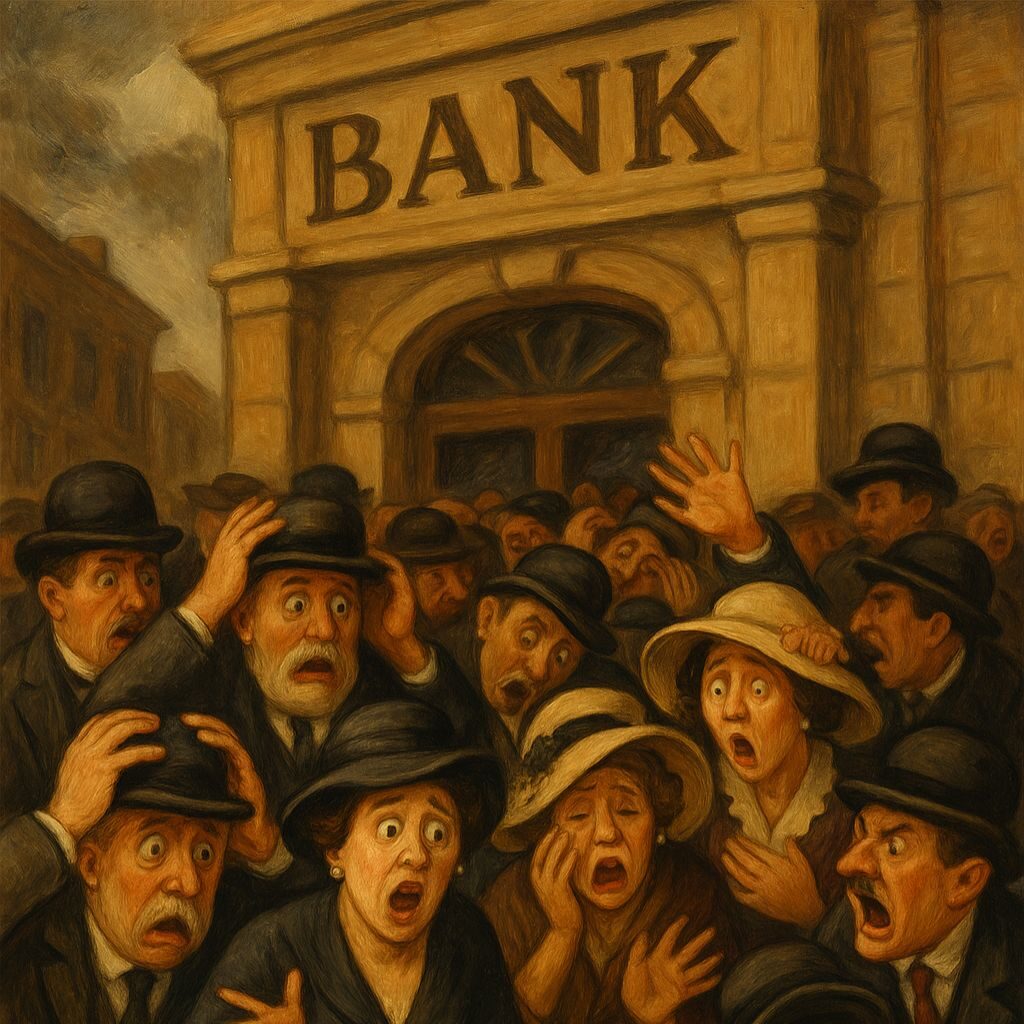
But the market wasn’t built to last. When the bubble burst in 1929, stocks ultimately fell 89%, wiping out families, fortunes, and futures. One in four Americans lost their jobs, and the Great Depression set in. Cheap credit from the Federal Reserve had fueled the boom, while lax oversight left everyday investors drowning in debt, and false confidence.
The lesson? Crashes aren’t just about speculation— they’re about the lack of guardrails to keep markets from running off the cliff. After the 1929 collapse, the U.S. government responded with the Banking Act of 1933, better known as Glass-Steagall, which separated commercial banking from Wall Street speculation and introduced FDIC insurance to protect deposits. It was proof that regulation isn’t about “more” or “less”— it’s about balance.
That balance is just as important today whenever new industries emerge. But there are still two more ingredients in every market crash. The next one is harder to spot— because when you’re in the middle of it, it doesn’t even feel like a problem.
THE GOLDEN AGE OF GREED
POORLY UNDERSTOOD INNOVATION
To get a good feel for pattern 3, poorly understood innovation, we will jump to the 1980s. Before every major crash is the rise of a new financial innovation that few truly understand.
In the late 1970s and 1980s, Wall Street entered its golden age of greed. Bankers went from quiet back-office accountants to some of the wealthiest people in the world. Technology was the accelerant. Computers made it possible to design new and complex investment products, and banks raced to be first. Investors loved the promise of safety and high returns. Banks loved the profits. But beneath the excitement, many of these products were only partially understood— even by the firms selling them.
Sound familiar? (Blockchain, stablecoins, altcoins, Bitcoin— anyone?)
Back then, the innovation was something called portfolio insurance. Two professors, Fischer Black and Myron Scholes, had laid the groundwork for a system that looked like a safety belt for investors. The idea was simple in theory: if stocks dropped, computers would automatically sell, hedging losses with offsetting bets. In practice, it was so complicated that even Wall Street didn’t fully grasp how it would behave in a real crisis. By 1987, over $80 billion was tied to this strategy. Confidence was sky-high— but the foundation was fragile.
Meanwhile, leveraged buyouts and hostile takeovers were creating market manias of their own. Stock prices could soar on rumors alone, while regulators looked the other way. When the market finally began sliding in October 1987, portfolio insurance systems triggered automatic sell orders. Each small sell-off triggered more selling, until the market collapsed in a chain reaction.

The result was Black Monday— October 19, 1987— the worst single-day percentage drop in U.S. stock market history. Billions vanished in hours. Once again, the ingredients were the same: overconfidence, weak guardrails, and a misunderstood innovation that magnified risk instead of containing it.
2008 Financial Crisis
BUILDUP OF MASSIVE DEBT
2008 is an exemplary example of the fourth pattern that always shows-up before a crash, which is the buildup of massive debt. If speculation is the spark, debt is the fuel that makes the fire uncontrollable.
The 2008 financial crisis is still fresh in many minds. After the dot-com bust of the early 2000s, investors searched for safer bets. Housing felt like the answer— “real,” tangible, and supposedly stable. Banks eagerly delivered by creating complex mortgage-backed securities and collateralized debt obligations (CDOs). The mechanics were simple: hand out mortgages to anyone, package them into securities, then sell them to investors around the world.
But behind the curtain, the truth was dangerous. These securities were so complex that even the banks selling them didn’t fully understand the risks. Regulators looked the other way. Borrowers took on mortgages they could never realistically afford. Household debt exploded, leverage piled up, and banks focused more on feeding investor appetite than serving homeowners.
When housing prices inevitably fell, the entire structure unraveled. Lehman Brothers collapsed in September 2008, unleashing panic. Credit markets froze. Neighborhoods were emptied as foreclosures swept across the country. Stocks/Equities Unemployment spiked to levels not seen in decades. The global economy staggered. It became the worst financial crisis since the Great Depression.
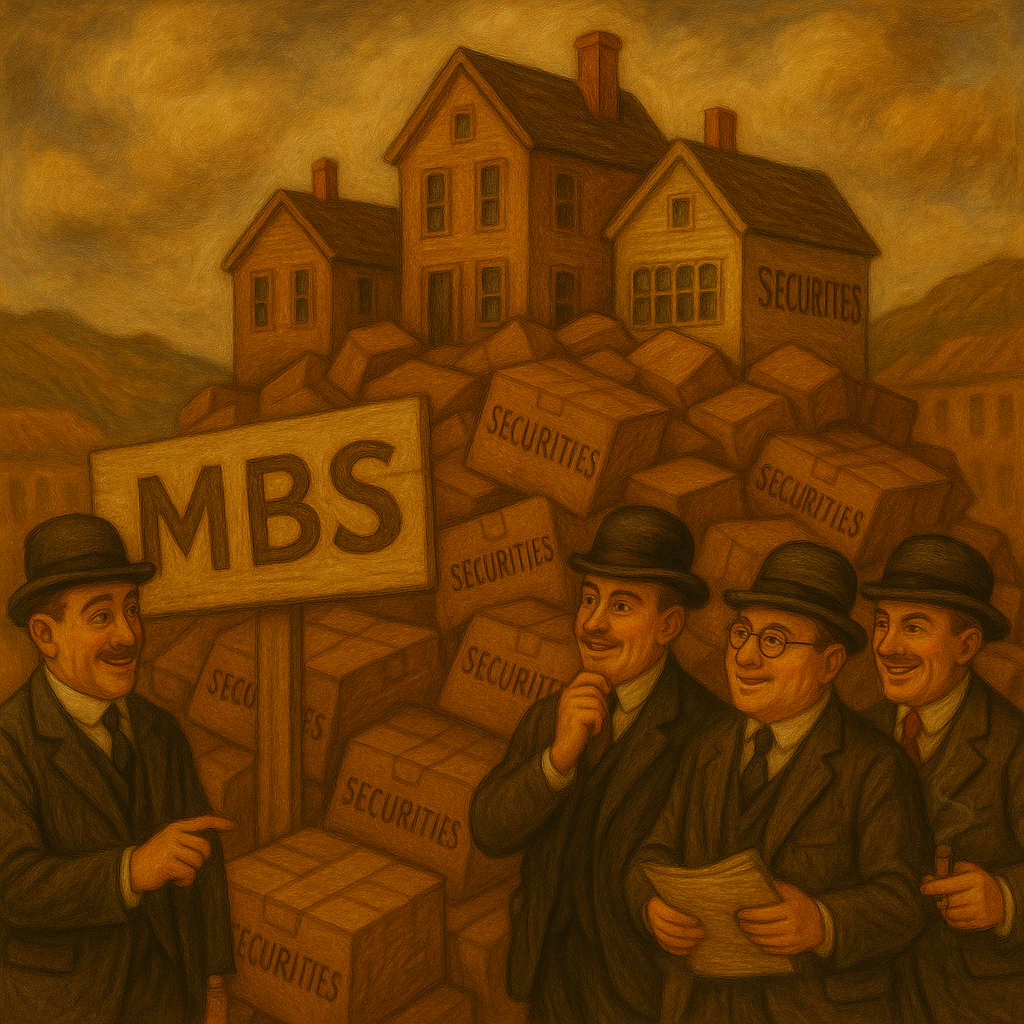
And yet, the root causes weren’t unique. The same four patterns were all there:
- Overconfidence – “housing never goes down, if it does, it will bounce back.”
- Regulatory failures – watchdogs asleep at the wheel.
- Misunderstood innovations – mortgage-backed securities and CDOs.
- Excessive debt – leverage piled on leverage, like building a tower of cards on borrowed cards, piled higher and higher until one unexpected shock— what some call a black swan event— sets off a domino effect that topples the entire debt structure.
The lesson of 2008 is the lesson of every crash: debt magnifies mistakes until they can no longer be ignored.
How and Where Do You See These Same Patterns Today?
It is simple to see if you are NOT involved in the “Get Rich Quick Scheme”, drinking the Kool-aide: Crypto, Altcoins, Bitcoin, Stablecoins.
Now, you might be thinking: “I’m not involved in that arena.” But remember— most people weren’t directly involved in mortgage-backed securities either. And yet, when that bubble burst, few were left unscathed. The same is true today. The crypto market is massive, and stablecoins are now directly linked to the bond market. That makes this more important than ever to understand— because protecting your wealth depends upon it.

The Coming Storm: Crypto, Bitcoin, Stablecoins, and Bond Market Fragility
The Four Warning Signs in Crypto— Especially Bitcoin
1. Overconfidence— Speculation Over Substance
Are people investing without regard for true value, hoping only to flip for a profit? Yes.
Crypto people packaged Bitcoin as “currency”, but no one uses it to buy daily necessities, and no one ever has. The real question is: what does it actually do? Does it serve a lasting purpose, or is it simply the world’s largest speculation game dressed up as innovation?
2. Do these new markets lack guardrails— or face sudden, whiplash regulations?
The answer is a resounding yes.
3. Poorly Understood Innovation
Are complex financial crypto products being adopted without genuine understanding? Without question. Few people can truly explain Bitcoin, and most explanations are wrong. People repeat claims like “Bitcoin is the new gold” or “digital gold” and many call it a “hard asset.” But you can’t hold it, it has no utility, and its technology ‘blockchain’ is easily duplicated— hence the flood of altcoins. It’s been promoted as a “currency,” but the reality is clear: it’s purchased and hoarded only in hopes of selling at a higher price. That is the textbook definition of speculation. Every bubble in history has been built on the illusion that this time is different.
4. Leverage & Debt
Is debt quietly piling up behind the scenes? Yes again. Wall Street has already pulled Bitcoin and other cryptocurrencies into the paper markets through futures contracts and ETFs. Banks, hedge funds, and institutions weren’t about to miss out on lucrative trading fees, so they stacked leverage and margin onto an already unstable foundation.
For example, the BlackRock chief executive, Larry Fink, was previously a serious Bitcoin critic, but in July 2024 he did a 180, and said he had been "wrong" about Bitcoin and now believes Bitcoin is "digital gold" and a "legitimate financial instrument". State Street forecasts that cryptocurrency ETFs will be one of the largest ETFs in North American assets by the end of 2025.
A striking parallel can be drawn to the lead-up to 2008, when pension funds and institutions poured into mortgage-backed securities without fully understanding the risks. Today, the same pattern is unfolding with Bitcoin and other cryptocurrencies.
Optimists may insist crypto is different this time. But look closely: all four warning signs that preceded every major crash in history are flashing now.
If that wasn’t enough, look at the chart revealing Bitcoin’s insane volatility before leverage and margin were available and those two ingredients are what catapults volatility. Bitcoin collapsed more than 90% in one of its bear markets!
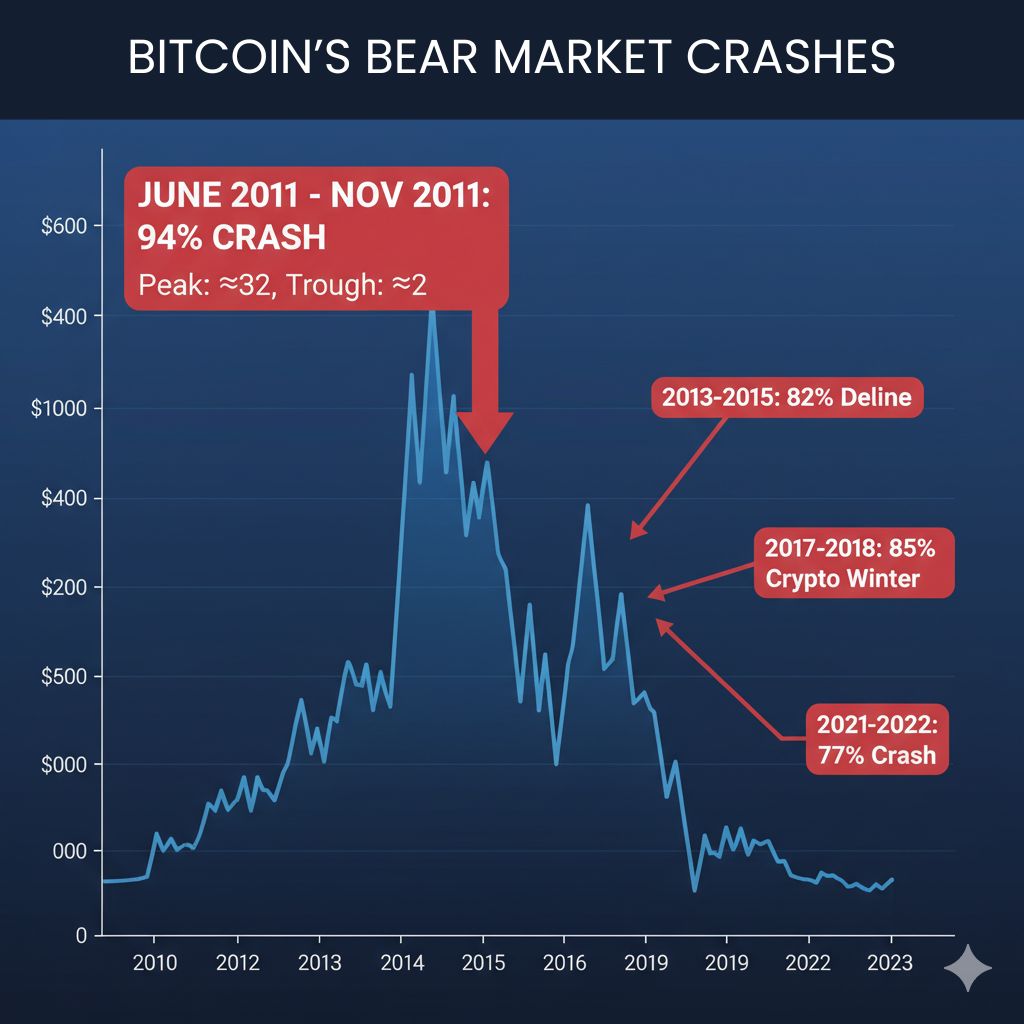
When the crypto bubble bursts, it won’t just rattle a niche sector— it could destabilize what has become a global casino. The fallout may ignite a tidal wave through fragile bond markets.
In fact, the risk extends far beyond crypto. History shows that large crises rarely remain confined to one sector; they spread like falling dominos. And if you haven’t been paying attention, the bond market is already fragile worldwide.
How a Crypto Bust Could Hit Bonds & Liquidity?
Here’s the mechanism:
Large crises rarely remain isolated; they fall like dominos. And the bond market— fragile worldwide— is at the center of the risk.
- In April 2025, tariffs jolted markets. Treasury yields spiked, liquidity thinned, and leveraged trades were cut back. It took a 90-day tariff pause to calm things down. That was a warning shot.
- Just a few short months later, the new GENIUS Act was passed, requiring dollar stablecoins to hold 1:1 reserves in cash and short-term Treasury Bonds. In calm markets, this creates a steady new buyer of government debt— essentially, fresh demand for T-bills. But in times of panic or crisis, mass redemptions would force issuers to dump those same Treasuries, injecting massive volatility into the bond market— precisely where safety is expected. And let’s not forget: the bond market is the largest and most important market in the world. As the old saying goes in finance, “If the bond market catches a sniffle, the stock market catches the flu.”
- Spot Bitcoin and other cryptocurrencies have been pulled into the futures markets and packaged into various ETFs.
As a result, stablecoins have effectively hardwired crypto’s risks
directly into the bond market’s plumbing.
When positioning gets crowded, guardrails lag innovation, and leverage stacks up— even assets the government labels “safe,” like the bond market, can seize up. The liquidity freezes of both the 2008 and 2020 financial crises proved this point. In both cases, the U.S. government became the largest buyer of its own bonds (their own debt).
In 2008, the entire lending and banking system failed. This forced the government to become the buyer of last resort— printing dollars (a process known as quantitative easing) to purchase its own bonds and mortgage-backed securities from banks. In doing so, it effectively bailed out financial institutions, insurance companies, and large corporations.
But debt didn’t disappear; it was merely shifted from bank balance sheets to the governments, where it ultimately became the American people’s debt. As a result, every round of money printing or increase in government debt erodes your dollar’s purchasing power.
That’s why a proper hedge— historically, gold— matters: not to win the mania, but to survive the unwind and protect against the silent theft of your dollar’s value.
When Recessions, Crises, and Bond Meltdowns Hit— GOLD SHINES
As long as there have been paper markets, there have been crashes— and as long as governments have held the power to print money, they’ve found ways to debase it. Every cycle follows the same rhythm: debt expands, confidence peaks, and liquidity vanishes when it’s needed most. Bonds— once considered untouchable— become victims of the very system they were designed to stabilize. Yet through every currency collapse and bond market convulsion, one asset has stood above the wreckage. Gold. The true safe-haven that outlives the paper promises of empires, hoarded quietly by the very central banks that erode the value of the dollar.
The Case for Gold During Times of Crises
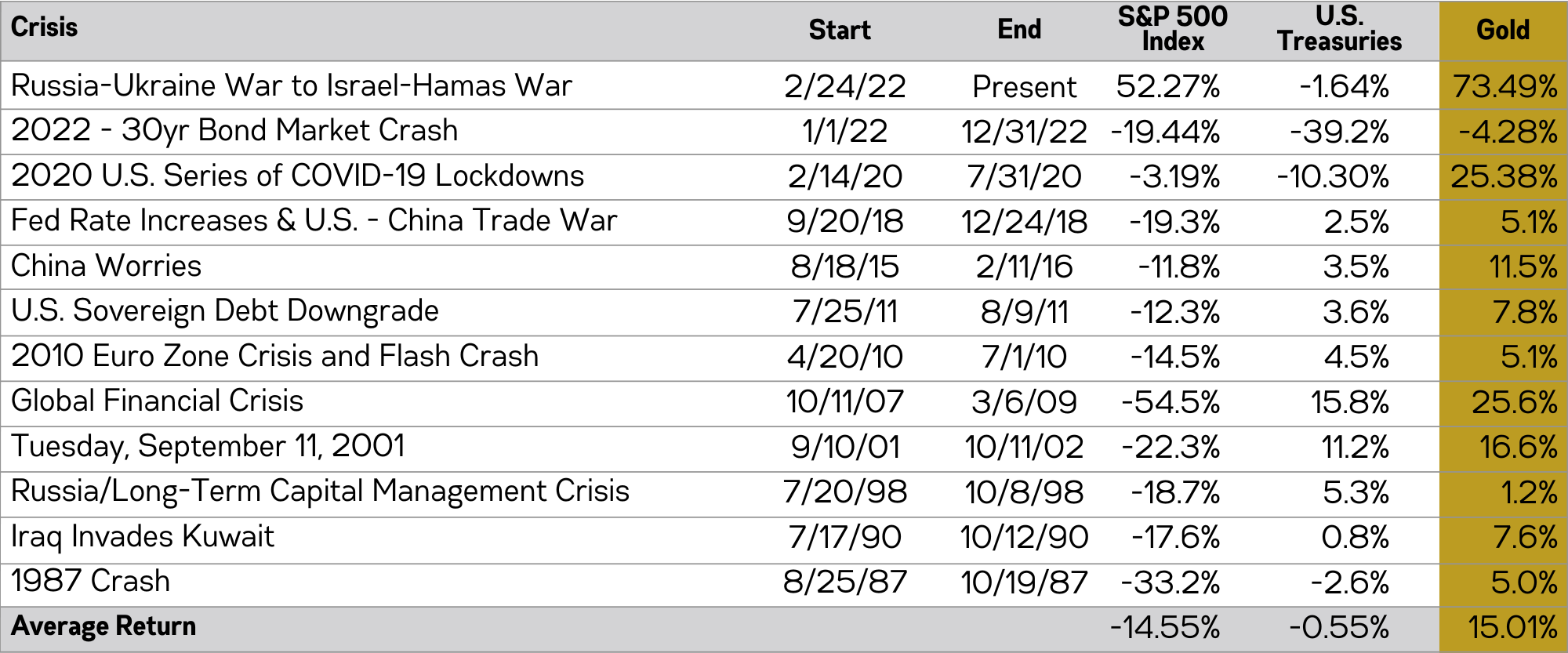
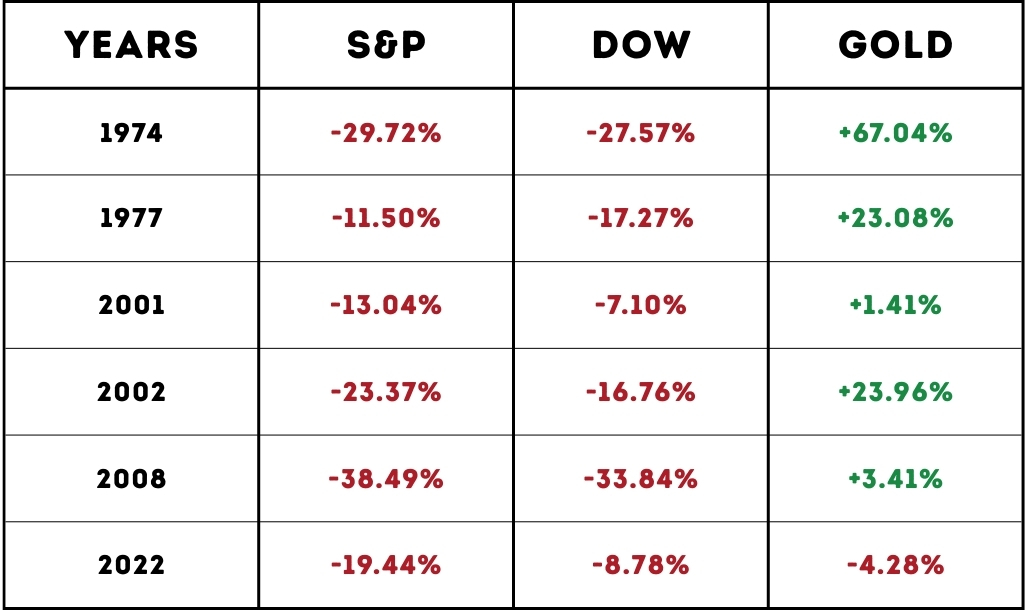
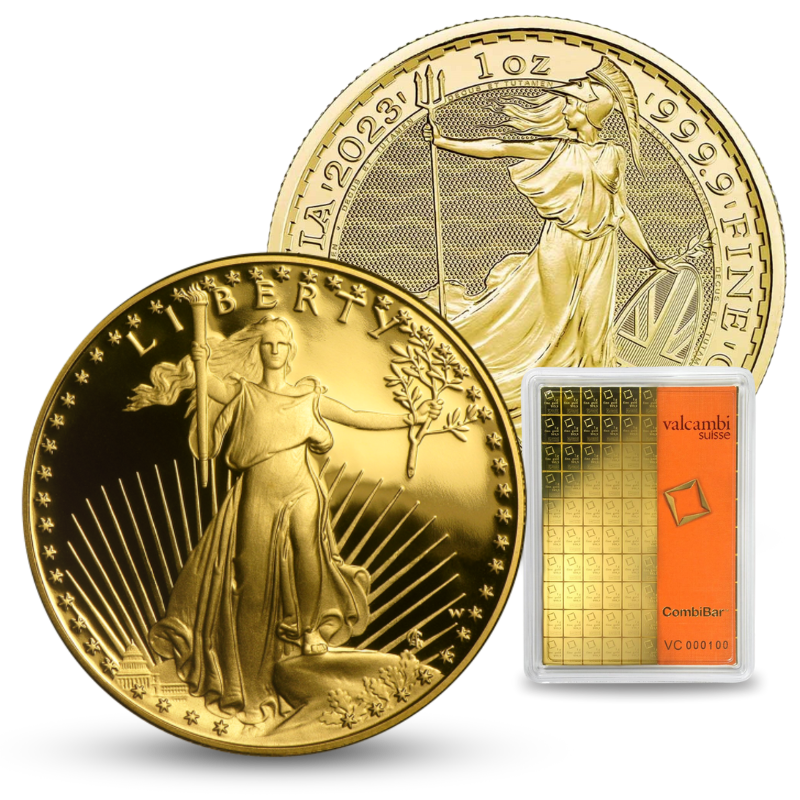
Through Great Years & Terrible Years... Gold Shines
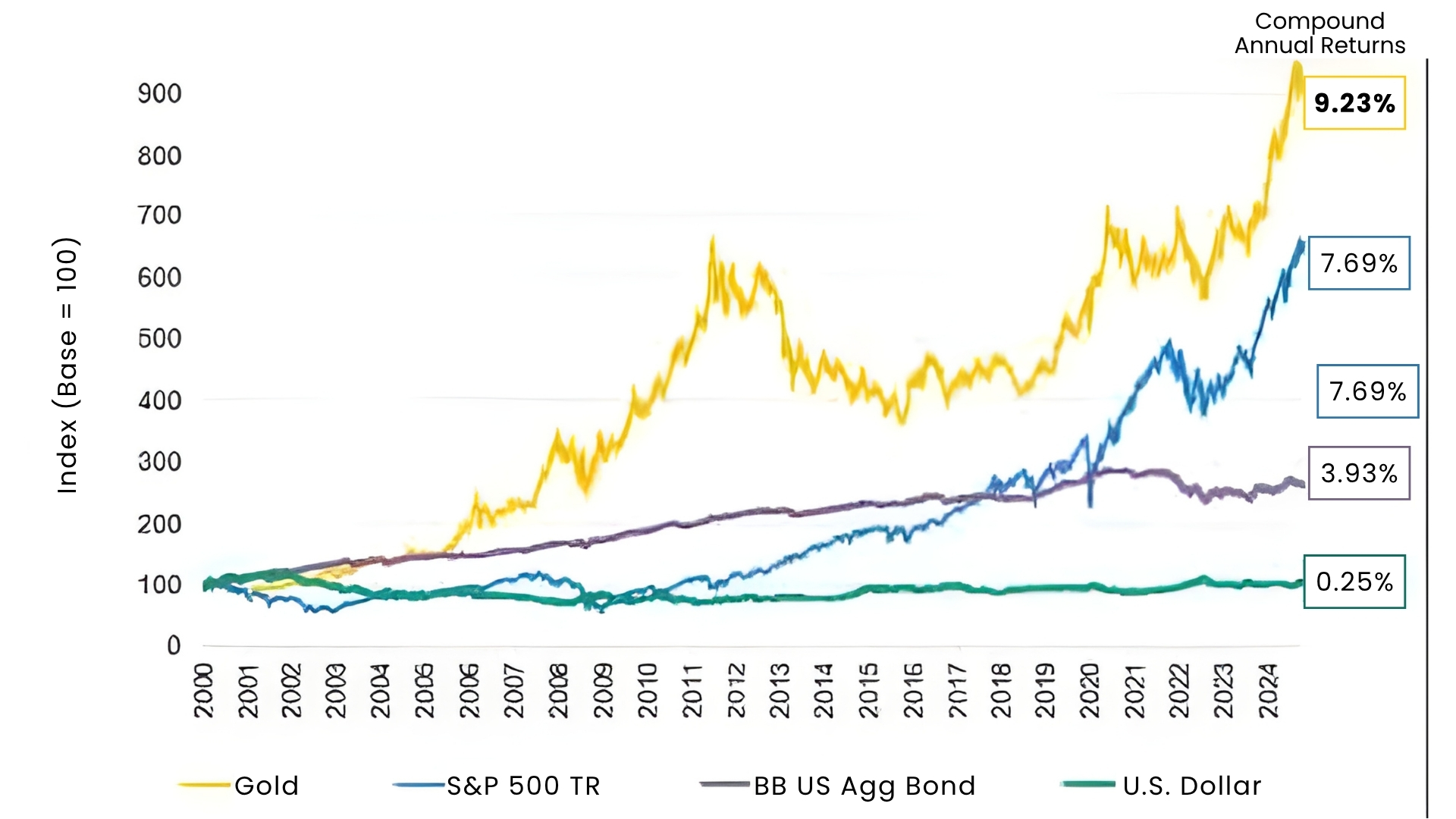
How important has gold been since 1971, when the U.S. severed the dollar from gold? Shocking the world and breaking the Bretton Woods Agreement...
- Gold: Opened at $35 dollars in 1971 and closed 3/26/2025 at $3,019.57 = +8,527% gain
- S&P 500: Index opened 1971 at $91.15 and closed 3/26/2025 at 5,712.20 = +6,169% gain
- DOW: Index opened 1971 at $830.57 and closed 3/26/2025 at 42,454.79 = +5,011% gain
- Treasury Bond: Note: 30-year Treasury bonds were not available in 1971.
To estimate the profit percentage of long-term bond investing, this example assumes the purchase of three Treasury bonds, with the initial investment and earned interest rolled into each subsequent bond. This strategy spans the full 54-year period from January 1971 to March 31, 2025.
-
In January 1971, you purchase a 20-year Treasury bond at the prevailing rate of 6.5%.
-
In January 1991, you roll the proceeds into a 30-year Treasury bond, also yielding 6.5%.
-
Finally, in January 2021, you reinvest those funds into another 30-year Treasury bond at a rate of 1.65%.
Total nominal profit percentage by 2025: +623.28%
-
Purchasing Power of the Dollar
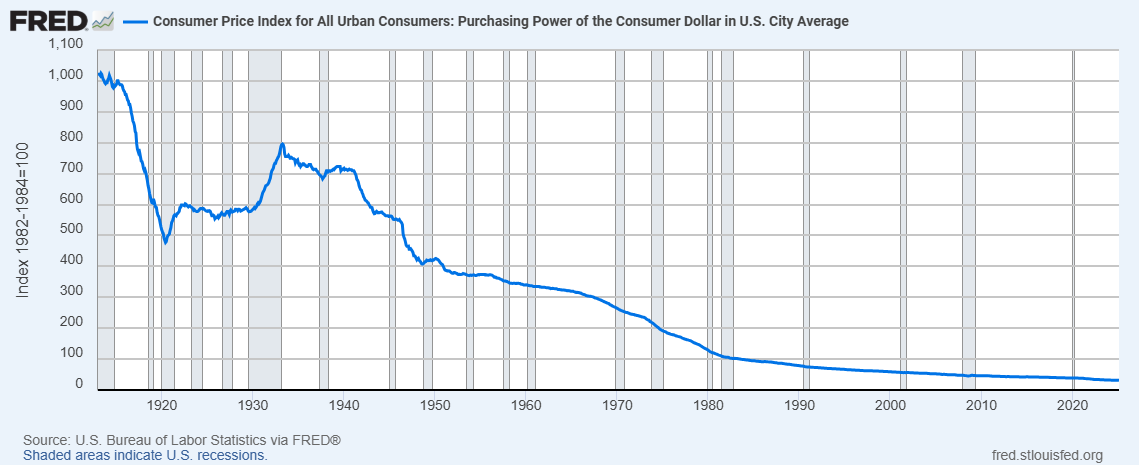
The most important reason to hedge and diversify your wealth with gold is the declining purchasing power of the U.S. dollar. Over time, the dollar’s value has eroded significantly due to inflation— primarily driven by excessive money creation (money printing) and debt expansion. These two forces are deeply interconnected. Historically, all fiat (paper) currencies have eventually failed due to inflation, leading to currency resets or radical shifts in monetary policy.
From January 2000 to February 2025:
(last update to the Fed website)
USD Purchasing Power Has Declined 47%
- January 2000: The CPI was approximately 168.8
- March 2025: The CPI is approximately 319.1
Source: FRED+1Bureau of Labor Statistics+1
An 89.1% increase in the CPI means that purchasing prices have nearly doubled since 2000. Consequently, the dollar's purchasing power has decreased by approximately 47% over this period.
From August 1971 to February 2025:
(last update to the Fed website)
USD Purchasing Power Has Declined 85-90%
- August 1971: The U.S. abandoned the gold standard, leading to significant inflationary pressures.
While exact figures can vary based on different CPI calculations, it's widely reported that the dollar has lost approximately 85% to 90% of its purchasing power since 1971. This means that what could be purchased for $1 in 1971 would cost between $6.50 and $10 today.
Source: FRED+1Bureau of Labor Statistics+1
This is for informational purposes and not to be taken as financial or tax advice.
Crashes are Inevitable—
Loosing Wealth Doesn’t Have to Be
Want to understand Bitcoin? Suggested read, Gold Crushes Bitcoin
The Harvard Gold
Group Difference
Your Trusted Gold IRA Company
Harvard Gold Group (HGG) holds an A+ rating with the BBB and holds 5-star ratings on all major review sites.
HGG is the first gold dealer in America to provide customers the more “expensive" specialty coins at the same low range cost we offer for bullion coins. Don’t pay more for numismatic, semi numismatic, or collector coins.
We do not employ commissioned salespeople or bonused managers— ensuring that your goals, not sales quotas, are always our top priority.
Clients benefit from free consultations, transparent costs, and metals overviews, lifetime account support for you and your heirs— along with a simple, hassle-free buyback program.
Clients also enjoy direct assistance from HGGs co-owners who, since 2010, have helped Americans move over $100 million into tangible gold and silver, whether for secure direct delivery or retirement accounts / Precious Metals IRAs.
Ready to Hedge with Gold?
Call America’s #1 Christian Gold Co to Buy Your Physical Metals Today!