
Since the U.S. abandoned the gold standard in 1971, we see Gold has outperformed the S&P, DOW, and Treasuries:
For this article, we are using March 2025 gold price of $3,019.57.
Given gold’s historic run in 2025, we wanted to keep this article’s charts conservative. Doing so leaves room for the pullbacks and rebounds that are normal in gold and often precede the next major advance. In Jan. 2026, gold hit $5,589 and could reasonably fluctuate this year between $3,900 and $5,900, reflecting healthy base-building. This note is not meant to dispute the major banks’ 2026 gold forecasts— averaging around $5,500— but simply to point out that periods of consolidation are entirely normal and well within the range of possibility.
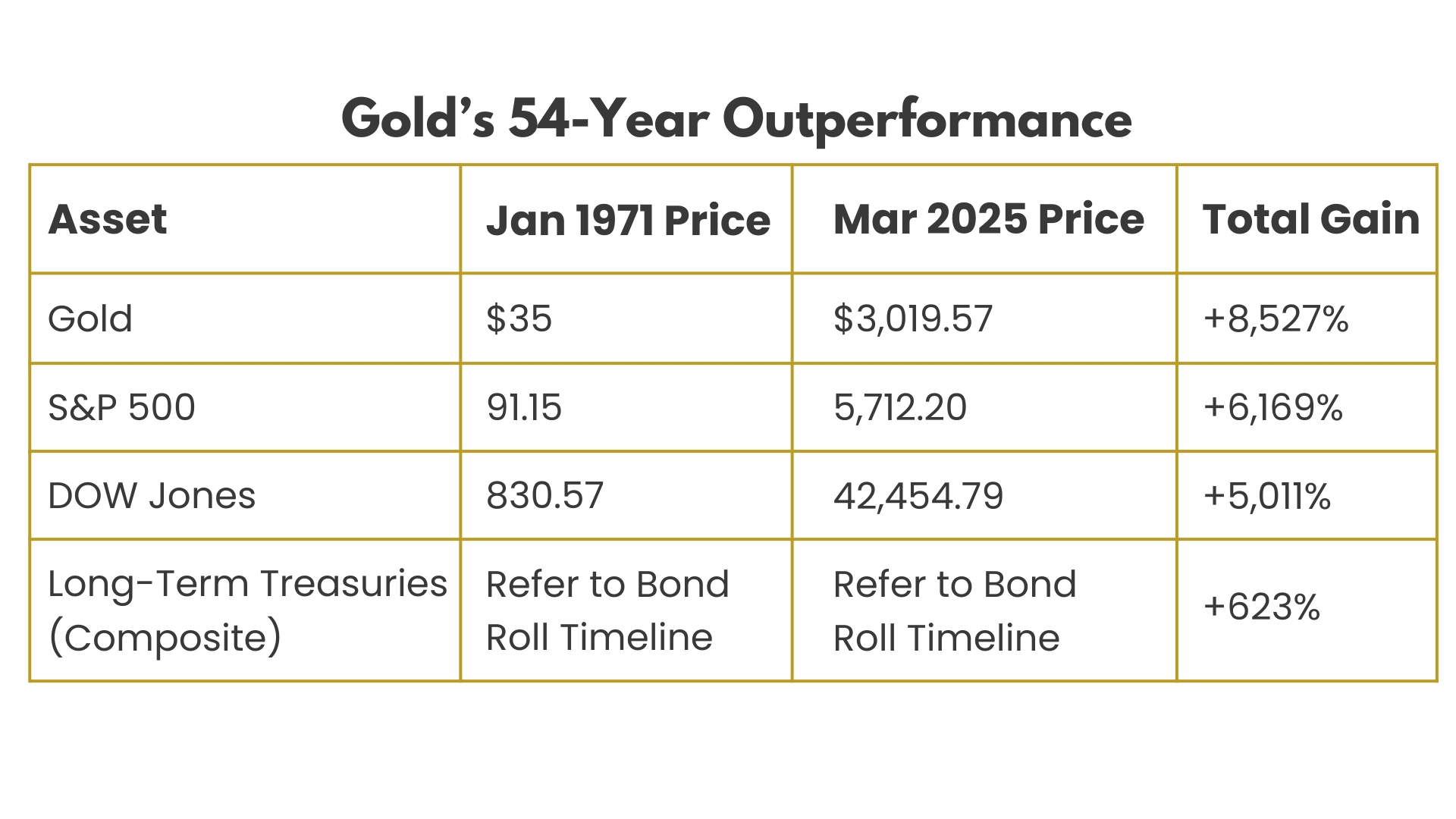
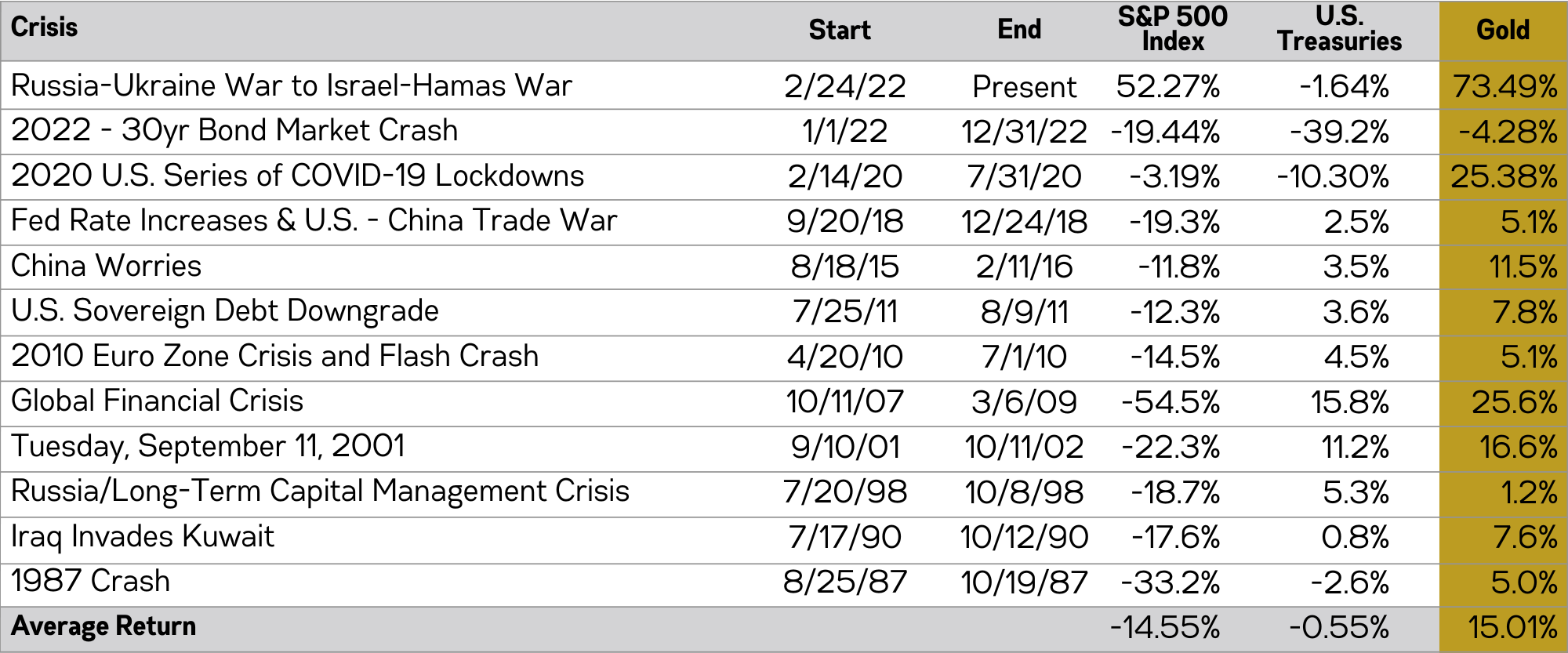
Gold-- often dismissed as a "non-yielding" asset-- has, in fact, outperformed both major stock indexes and long-term bonds throughout the entire fiat-money era. Even during the S&P 500's, strongest decades, gold surged in the inflationary 1970's, preserved wealth during the dot-com collapse, outperformed through the 2008-2012 financial crisis, and again during the 2020 COVID crisis
Re-Weighting the Portfolio: 60/20/20 to Add 20% Gold and Minus 20% of Bonds
Investors looking to diversify 60/20/20 can now compare the strategy directly against the standard 60/40 portfolio. New data shows that a 60/20/20 mix of stocks, gold, and bonds delivered a 38% higher compounded nominal return while also reducing volatility.
If we model a 54-year portfolio comparison:
- Traditional 60/40 (Equities/Bonds)
Weighted Return ≈ (0.60 × 6,169%) + (0.40 × 623%) = ≈ 3,719% - Gold-Augmented 60/20/20 (Equities/Physical Gold/Bonds)
Weighted Return ≈ (0.20 × 8,527%) + (0.20 × 623%) + (0.60 × 6,169%) = ≈ 5,132%
Gold shows a 38% higher compounded nominal return
Jan 1971 to March 2025:
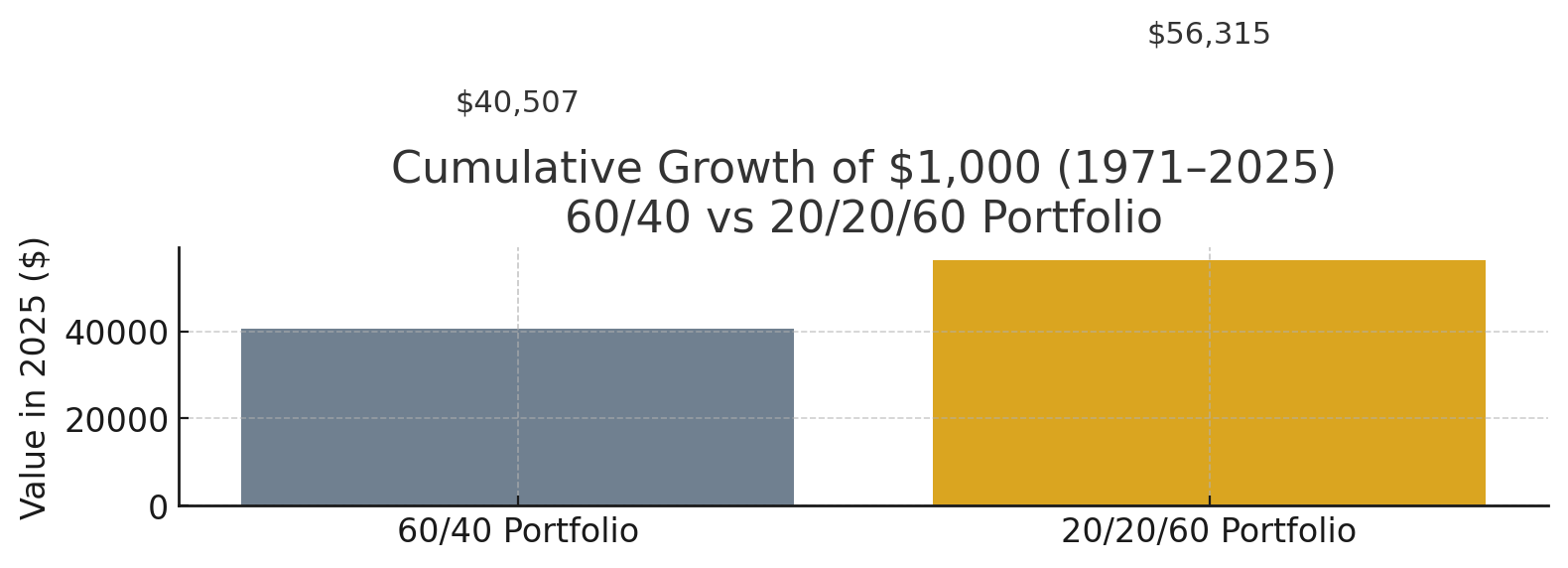
That’s a 38% higher compounded nominal return than the 60/40 model — while historically reducing volatility in every inflationary cycle.
Why Gold Makes the Critical Difference
- Inverse Correlation to Bonds and Stocks— Gold historically rises during equity drawdowns and inflation shocks. Bonds, in contrast, lose value when inflation and rates rise simultaneously.
- Gold Protects Against Dollar Erosion— As the dollar loses purchasing power over time, gold has historically helped preserve wealth.
- Real Asset, Not a Promise— Bonds rely on governments to maintain purchasing power; gold is purchasing power.
- Liquidity in Crisis & War— Gold remains globally tradable when currencies, sovereign debt, or banking systems lose trust.
- Central Bank Validation— Global central banks have been net buyers of gold every year since 2010— signaling where true “reserve” confidence lies.
- Gold Benefits from De-dollarization— As more nations reduce reliance on the U.S. dollar, gold’s role as a trusted global reserve asset becomes even stronger.
- Gold Defends Against Inflation & Policy Mistakes— When debt grows, money supply expands, or confidence in government policy weakens, gold has historically provided protection.
- Gold Improves Portfolio Resilience— It helps lower overall volatility and strengthen a portfolio through uncertain market cycles.
The Case for Physical Gold During Times of Crisis
Conclusion
Had an investor allocated just 20% to gold since 1971, (When the U.S. abandoned the gold standard) the portfolio would have:
✅ Outperformed the traditional 60/40 model by roughly 38%,
✅ Endured less correlation risk, and
✅ Preserved real purchasing power across six major inflationary and recessionary periods.
In an age where governments rely on perpetual debt expansion, a “balanced” portfolio without physical gold is no balance at all.
The 60/20/20 model isn’t speculation — it is TRUE protection

The Modern Investor’s Reality: When Safety Is Engineered, True Protection Must Be Chosen
In today’s financial system, safety is no longer organic— it’s manufactured. The same policies that hold the bond market together are the very ones eroding the purchasing power of the dollar that those bonds are paid in. Every rate cut, every new round of quantitative easing, and every fiscal bailout may buy time, but it also deepens dependency and accelerates the devaluation of paper assets. That is why the world’s most sophisticated institutions— from global central banks to sovereign wealth funds— continue to quietly accumulate gold. They understand what most investors forget: gold is not a speculation; it’s insurance against the failure of paper promises.
When the next crisis hits, the question won’t be whether the Fed intervenes— it will be how much more the currency must be sacrificed to preserve the illusion of stability. In that moment, those who hold physical gold will not be waiting for reassurance from the central bank. They will already own the one asset that stands outside the system, immune to default, devaluation, and deceit.