
US Debt Risks Crashing the Dollar
Genius Act Law Embedded Crypto into U.S. Debt

It doesn’t matter if you own bonds, Treasuries, or crypto—this affects every American.
New laws have now tied these systems together, directly impacting the value of your dollar.
This report takes all the confusing money talk and turns it into plain English without "Wall Street talk" so that regular people can actually understand.
The U.S. debt system is already fragile—and now it has been directly tied to crypto— this means that the same system that supports Social Security checks, your savings, and the value of every dollar is now being linked to one of the most wild and unpredictable markets on Earth.
Most people have heard the term “debt spiral,” but few understand how serious it is. The government and big institutions throw around complicated language that makes regular folks tune out. Yet many have felt it in their gut—something did not feel right in 2008, it did not feel right in 2020, and it certainly does not feel right today.
The goal of this report is simple: to show what is really happening inside the financial system, why it matters to everything priced in dollars, and how owning real, physical gold can help protect you against a falling dollar, crisis‑driven chaos, and—God forbid—war.
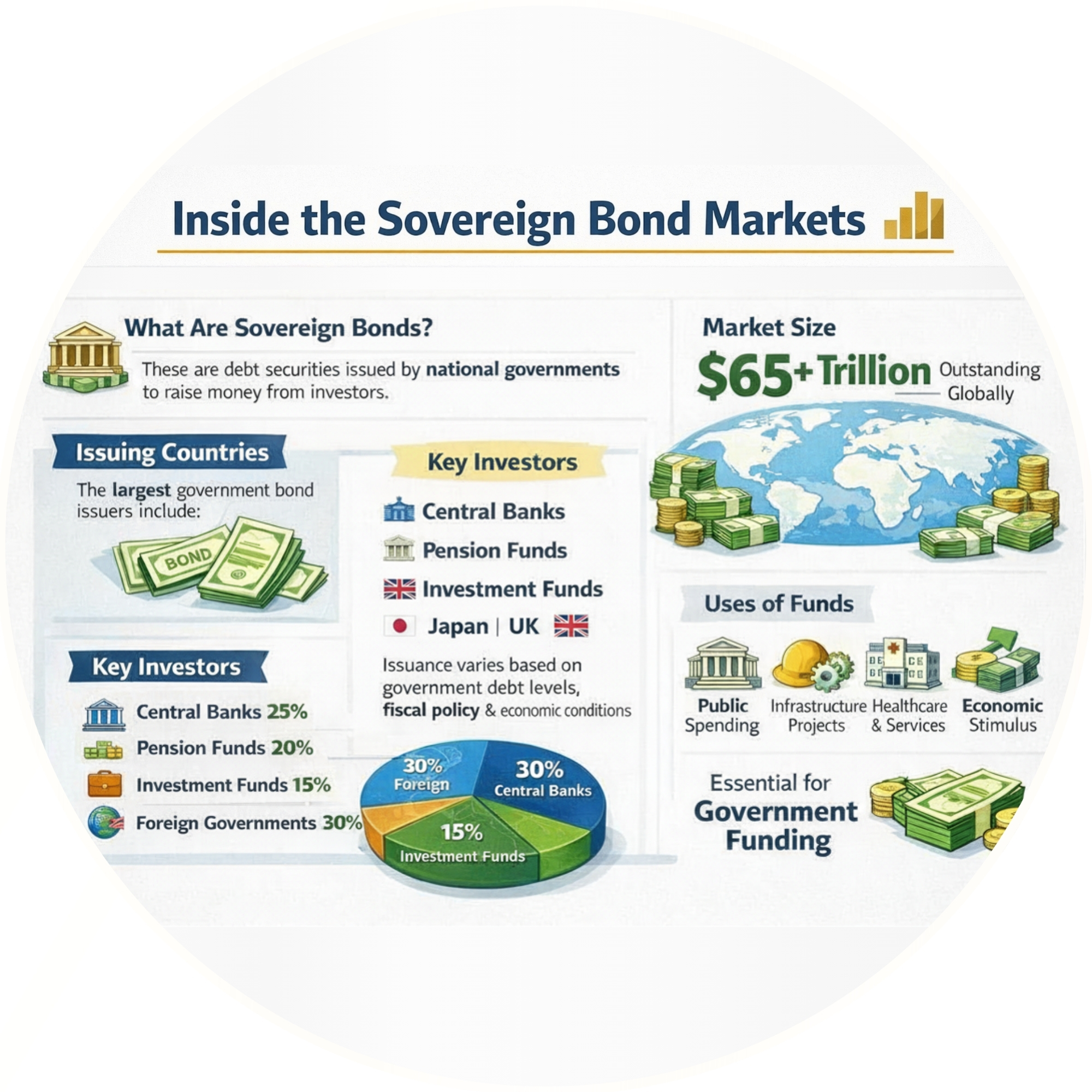
What is the Bond Market?
U.S. debt is created when the government borrows money by selling IOUs. Whether it’s called a Treasury, bond, note, or bill—it’s all debt. Most people simply call it the bond market.
This market sits at the core of the global financial system and touches everything priced in dollars: interest rates, mortgages, credit cards, banks, pensions, retirement accounts, stocks, derivatives, and the day-to-day purchasing power of the U.S. dollar.
When the bond market shakes, the impact spreads fast—borrowing costs rise, markets fall, liquidity dries up, and the dollar can lose value.
This isn’t just about bonds—it’s about the stability of the entire financial system.
The Enormity of the Debt / Bond Market
The U.S. is the largest piece of the global debt system
U.S. Debt Breakdown (Approximate):
Total U.S. Debt:
~ $58 trillion
U.S. Gov (Treasuries):
~ $39 trillion
Mortgages:
~ $11-12 trillion
Corporations:
~ $10-11 trillion
Cities & States
~ $4 trillion
This does not include future obligations (Social Security, Medicare, pensions), estimated at $100–$150+ trillion that are not funded today.
As of 2026, about $1 trillion per year is being added just to pay interest on existing debt.
Stock crashes scare investors, but when bonds break, the entire financial system can crumble—and even currencies can fail.
The New Dangerous Link: Crypto Embedded into U.S. Debt/Treasuries
A major shift has quietly taken place—one most Americans have never even heard about.
New laws, including the “GENIUS Act,” have linked stablecoins directly to the U.S. Treasury market. Stablecoins must now hold reserves largely in short-term U.S. debt.
At first glance, this looks helpful—it creates a new buyer of government debt. But it also creates a new risk.
The same system that supports stability in calm markets can amplify instability during panic.
In normal conditions, stablecoins increase demand for Treasuries.
In a crisis, they can be forced to sell those same Treasuries quickly to meet redemptions.
That means wild swings in the crypto world can now spill straight into the bond market that underpins the dollar. In other words, a volatile part of finance most people never think about has quietly been wired into the value of their money.
This creates a new transmission channel: Crypto volatility is now directly connected to the bond market.


Why This Matters: Contagion Spreads
Financial crises don’t stay contained—they spread.
The bond market is already showing signs of strain. Adding crypto-linked liquidity risk increases that fragility.
This is not theoretical—we’ve already seen warning signs:
- April 2025 Shock: Treasury yields spiked, liquidity dried up, and markets required intervention to stabilize
- Stablecoin Structure:
- Calm markets → steady demand
- Crisis → forced selling
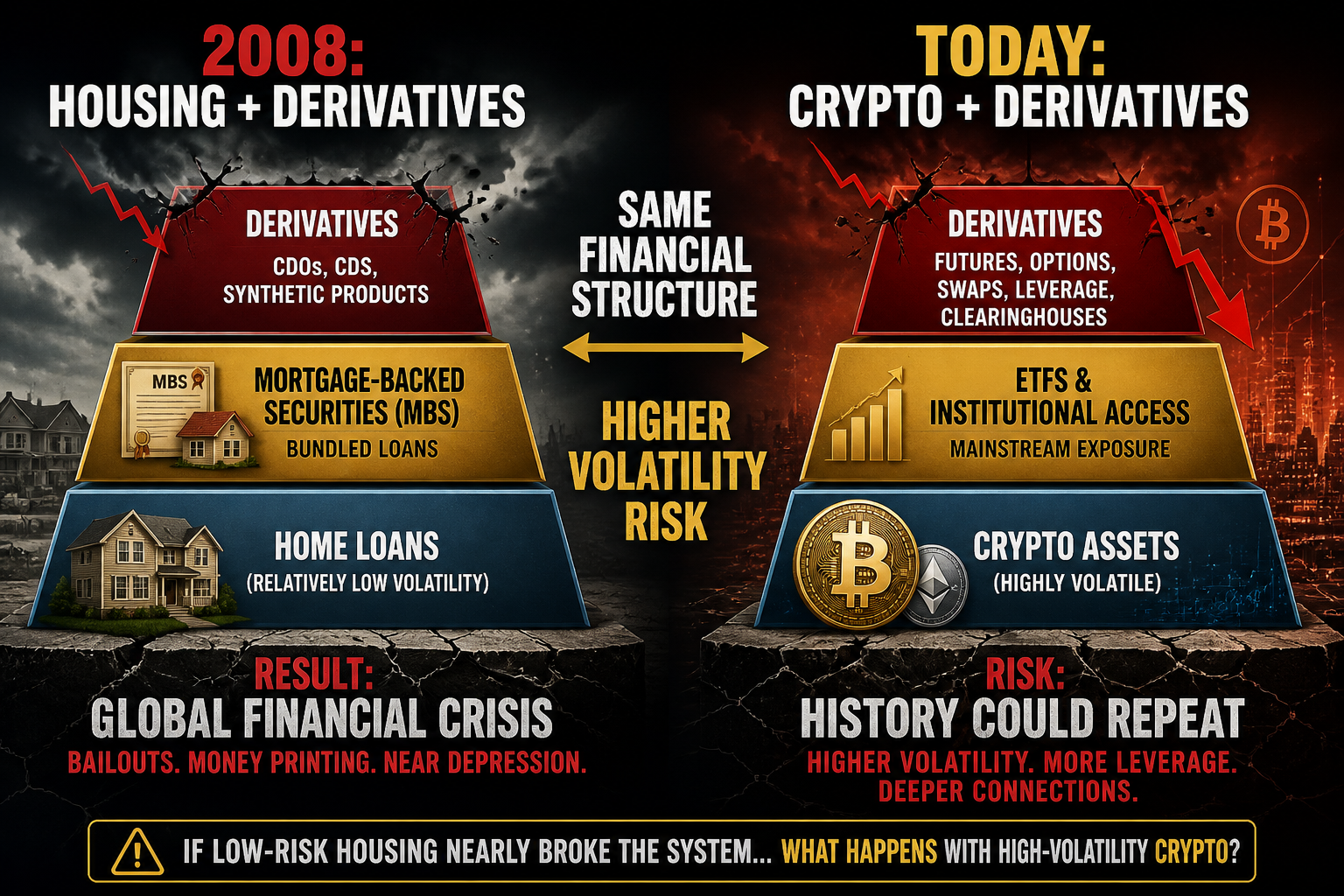
Crypto, ETFs, and Derivatives:
The Risk Multiplier
Crypto is no longer off in its own corner. It is now pulled into mainstream products like ETFs, mutual funds, futures, derivatives, clearinghouses, and other complex contracts that trade right alongside traditional investments.
A major example: as of April 30, 2026, Gemini (A crypto only settlement platform) is now approved to operate its own derivatives clearinghouse. That may sound technical, but in plain English, it means a 'crypto only' firm is moving into the core wiring of Wall Street.
This matters because derivatives helped turn the 2008 housing crisis into a global financial disaster. They didn’t cause it alone— but they amplified it through leverage, complexity, and interconnected risk.
Now consider this:
Housing is a relatively stable asset— yet housing-related derivatives still nearly collapsed the global system in 2008. It took massive bailouts, money creation, and central bank intervention to prevent a second Great Depression.
Crypto, on the other hand, can rise or fall by huge amounts in a single day— before adding any leverage.
When you combine crypto’s extreme price swings with derivatives, ETFs, leverage, and clearinghouses, the risk no longer stays in the crypto world.
It spreads into the same system that supports banks, social security, retirement accounts, Treasuries, and the dollar.
Crypto is no longer outside the financial system— it is wired into it.
How a Crypto Shock Could Hit Bonds
The risk is not simply that crypto falls— it’s how that decline spreads through the financial system:
- Redemption Pressure: A sharp decline in crypto prices could trigger mass withdrawals from stablecoins
- Forced Treasury Sales: Stablecoin issuers may sell Treasuries to meet liquidity needs
- Yield Spikes: Selling pressure pushes yields higher, meaning bond prices fall
- Liquidity Freeze Risk: Market depth disappears, increasing volatility
- Leverage Unwinding: Institutions may be forced to deleverage
- Collateral Stress: Treasury volatility disrupts funding markets
The Bigger Picture:
The bond market is the largest and most systemically important market in the world. Its stability underpins everything— from mortgage rates to global liquidity flows.
These new linkages mean crypto instability can now impact the very system investors rely on for safety.
Crypto— what was once considered a separate, speculative corner of finance— has now been integrated into the foundation of the global financial system.
What was once optional exposure is quickly now unavoidable.

The only answer to hedge the risk of the financial system and the dollar is physical gold.
When Debt, Markets, and the Dollar Are at Risk—Gold Has No Counterparty Risk
Why is Physical Gold Is the Ultimate Hedge & A Critical Diversifier? – Click to explore clear facts, figures, and charts—showing exactly why gold is the ultimate hedge. Compare the ROI of stocks, bonds, and gold. As the dollar dives, gold shines. As national debt soars, gold climbs. It’s about protection. From inflation— to global unrest— to bad policies, gold has preserved wealth for centuries and is trusted across generations and every culture.